25% off on product page · save $3.66
Strength Training for Seniors: A Gentle At-Home Guide

Why Strength Matters in Everyday Life
Muscles help you get out of bed, climb stairs, lift a kettle, and steady yourself as you move through your day. Strength activities give those muscles a chance to work in ways that support everyday movement and independence.
Progress looks different for everyone. Your health, experience, recovery, and consistency all play a part, so there’s no need to compare your routine with someone else’s. A movement that feels manageable today may be enough to begin with.
It offers an approachable way to explore strength training as part of a routine that fits your life.
Start at a Comfortable Pace
Before starting a new exercise routine, consider checking with a healthcare professional. This is especially important if you have a chronic condition, a recent injury, balance concerns, or uncertainty about which movements are safe for you. A physical therapist can also help you adapt exercises to your needs.
Choose a clear space with a firm, nonslip floor. Place a sturdy chair against a wall so it won’t slide, and keep a stable support within reach. Wear comfortable clothing and supportive footwear, and have water nearby.
Move slowly enough to stay in control, and breathe naturally rather than holding your breath. Begin with a small range of motion if that feels more comfortable. Stop exercising if you experience pain, dizziness, or unusual symptoms, and seek medical advice as appropriate. If you have chest pain or severe shortness of breath, seek urgent medical help.
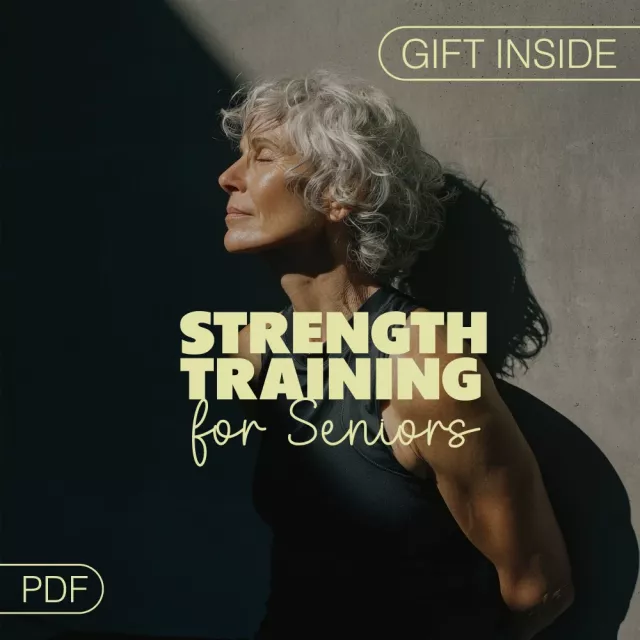
Featured in this guide
strength-training-for-seniors-made-easy-gentle-fitness-guide-for-health-independence-energy
A Simple At-Home Strength Session
Set aside about 20 minutes, adjusting the length as needed. You might spend five minutes warming up, about 10 minutes on strength movements, and five minutes cooling down. Rest whenever you need to; the clock is only a guide.
For your warm-up, try easy marching while holding a support, gentle shoulder rolls, or a slow walk around the room. Start with one set of each movement. Try a few manageable repetitions and stop before your form becomes difficult to control.
- Chair sit-to-stand: Rise from a stable chair and sit down slowly. Use the armrests or another stable support if needed.
- Wall push-up: Face a wall and bend and straighten your arms with control. Stand close enough to maintain a comfortable position.
- Supported heel raise: Gently lift and lower your heels. Keep both hands on a secure counter or support if that helps you feel steady.
- Light biceps curl: Curl a light weight or household object without swinging, but only if you can grip and lift it comfortably. You can practice without a weight first.
Finish with a slow walk or gentle movement until your breathing feels comfortable again.
Build a Routine That Fits
Aim for strength activities on at least two days a week, with recovery time between challenging sessions. You might choose two nonconsecutive days to start. The CDC’s physical activity guidance for older adults also includes recommendations for aerobic and balance activities.
Keep a simple note of what you did and how you felt afterward. If a movement leaves you unusually tired or uncomfortable, consider reducing the repetitions or taking more rest. When your routine feels comfortable, make one small change at a time instead of rushing to add weight.
Our team also offers practical guides for other parts of daily life. If you’re interested in vehicle upkeep, explore our Car Safety Inspections guide separately from your fitness routine.
Check the product’s listed specifications when evaluating build a routine that fits.
Before choosing, compare the product details with your daily routine, available space, care needs, and preferred setup. The strongest option is usually the one that fits the intended use clearly and remains simple to clean, store, and check before repeat use.
FAQ
What is the best strength exercise for seniors?
There is no single best exercise for everyone. A chair sit-to-stand can be a useful starting point for leg strength if it suits your abilities and you have the support you need.
What is the 3-3-3 rule for weight training?
The term can refer to different workout approaches, so there is no one universal 3-3-3 rule to follow. Choose a manageable routine based on your abilities rather than relying on a formula that may not suit you.
See if strength-training-for-seniors-made-easy-gentle-fitness-guide-for-health-independence-energy fits your setup