Car Safety Inspections Ebook: DIY Checks and Tips

Start With a Safe Inspection Routine
Park on level ground, switch off the engine, and set the parking brake. Choose a well-lit place away from moving traffic, and allow hot components to cool before inspecting under the hood. Keep children and pets away from the vehicle while you work.
Your owner’s manual is the starting point for model-specific procedures, warning lights, and recommended service intervals. Some checks require particular conditions; for example, tire pressure should generally be measured when the tires are cold. Follow the vehicle’s instructions rather than relying on a general checklist for every detail.
Stop driving and seek professional help if you notice serious brake problems, a damaged or rapidly deflating tire, or a significant fluid leak. A soft brake pedal, a tire with a bulge or exposed cord, or fluid pooling beneath the car deserves prompt attention. If the vehicle cannot be driven safely, arrange a tow instead of trying to reach a shop yourself.
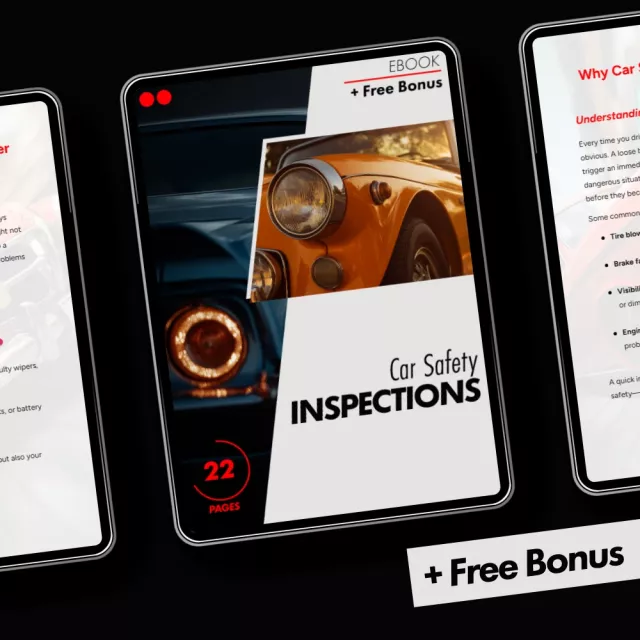
Featured in this guide
car-safety-inspections-ebook-ultimate-guide-for-diy-checklists-tools-and-tips
What to Check Around Your Car
Look at each tire for cuts, bulges, embedded objects and uneven wear. Measure pressure when the tires are cold and use the recommended values on the vehicle’s tire information label, usually on the driver’s doorjamb. Do not use the maximum pressure molded into the tire sidewall as your target.
Check headlights, taillights, brake lights, turn signals and hazard lights. A helper can watch while you operate the controls; otherwise, use a reflection or safely parked camera. Make sure mirrors are secure, look for windshield damage that obstructs your view, and check wipers for splits, streaking or missed areas.
Record new grinding noises, pulling, vibration or changes in brake-pedal feel and have a qualified technician assess them. A visual check cannot reveal the condition of every brake component.
A Quick Checklist
- Tires: Look for damage and uneven wear; check cold pressure against the vehicle label and have damage assessed.
- Lights: Look for lights that do not illuminate and arrange repair or replacement.
- Windshield and wipers: Address obstructed visibility, worn blades and glass damage.
- Brakes: Have a qualified technician inspect unusual noises or changes in pedal feel.
Note uncertain results as well as obvious damage, including when a problem appeared and whether it is getting worse. Official inspection criteria vary, so this is not a pass-or-fail list.
Tools and Habits That Help
Keep a tire-pressure gauge, flashlight and clean cloth handy. Use a notebook or your phone to record dates, pressure readings, warning lights and repairs. A record can help you spot a tire that repeatedly loses pressure or a light that fails more than once.
Set a monthly reminder and add another before a long trip. Follow your owner’s manual for maintenance intervals, and leave lifting or diagnosis of safety-critical systems to a qualified professional.
Use the Ebook to Organize Your Approach
If you want to make regular checks a habit, it offers a starting point for a more systematic approach to checklists, tools, and tips. Pair your routine with your owner’s manual and professional service when a concern needs diagnosis.
For a separate household purchase task, our team also offers the Electronics Price Adjustment Request Builder. It is unrelated to vehicle safety, but may be useful if you’re preparing an electronics price adjustment request.
DIY Checks and Official Inspections
Your driveway routine helps you notice concerns; an official safety or emissions inspection follows the rules for your vehicle and location.
Texas ended most non-commercial vehicle safety inspections in 2025, but emissions testing and other requirements can still apply. Consult Texas DPS for current rules and exceptions. In New Jersey, consult the Motor Vehicle Commission for requirements and exemptions that apply to your vehicle.
FAQ
What gets checked during a car safety inspection?
Requirements vary, but an inspection may cover lights, tires, brakes, and visibility equipment. Check with your local inspection authority for the list that applies to your vehicle.
Is Texas no longer requires inspection?
Texas ended most non-commercial vehicle safety inspections in 2025, but some vehicles still have inspection requirements and emissions testing may apply. Consult Texas DPS for current rules and exceptions.
What vehicles no longer need inspection in NJ?
New Jersey exemptions depend on vehicle characteristics and the type of inspection. Consult the New Jersey Motor Vehicle Commission’s current guidance to determine whether your vehicle is exempt.
What are the current car inspection requirements in Texas?
Most non-commercial vehicles no longer need a Texas safety inspection, but emissions testing and other requirements can still apply. Check Texas DPS for current details and vehicle-specific exceptions.
See if car-safety-inspections-ebook-ultimate-guide-for-diy-checklists-tools-and-tips fits your setup